
The quick version
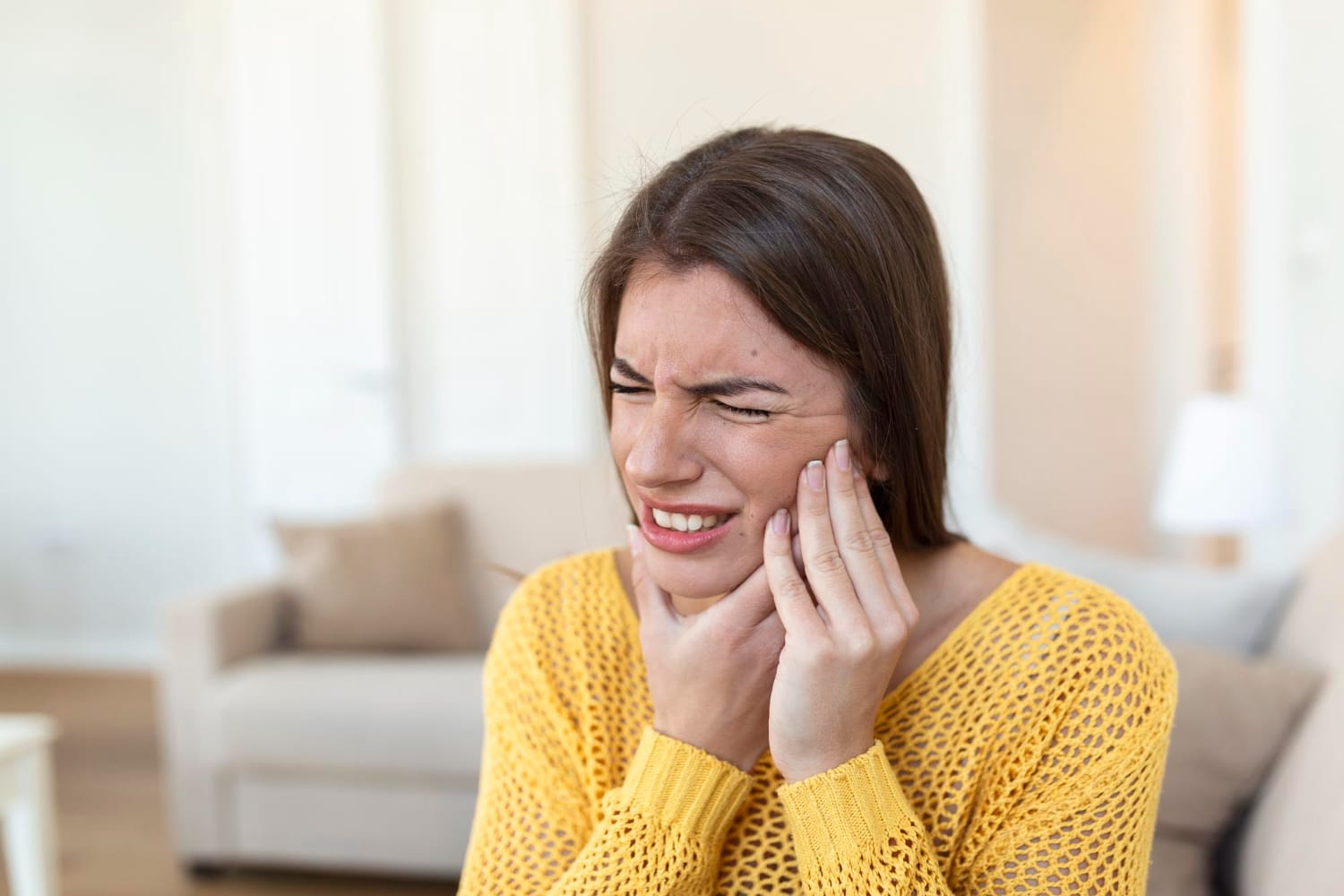
Jaw clicking usually comes from the temporomandibular joint (TMJ) — the joint just in front of your ears that controls chewing, talking, and yawning. It often happens when the small disc inside the joint shifts slightly during movement. In many cases it’s not serious, but if clicking comes with pain, stiffness, or restricted jaw movement, it can be a sign of a TMJ disorder worth addressing. Simple habit changes can help settle mild symptoms, and physiotherapy is effective at treating the underlying cause — not just the noise.
If your jaw’s been clicking or making little popping sounds, you’ve probably started to notice it more and wonder what’s going on. It might happen when you’re eating, talking, or just opening your mouth, and it can feel a bit odd if you’re not used to it.
In many cases, it’s nothing serious. But it can also be a sign your jaw isn’t moving as smoothly as it could, so it’s worth understanding why your jaw clicks and what’s behind it.
What does it mean when your jaw clicks?
When your jaw clicks, it’s usually coming from the temporomandibular joint (TMJ), the joint that connects your jaw to your skull. This joint sits just in front of your ears and helps control everyday movements such as talking, chewing, yawning and opening your mouth.
To explain it simply, a clicking sound often happens when the small disc inside the joint isn’t moving as smoothly as it should. This disc acts like a cushion between the bones, helping the joint glide comfortably. If it shifts slightly out of position during jaw movement, you might hear or feel a click as it moves back into place.
On its own, clicking isn’t always a problem. But if it’s happening alongside pain, stiffness, or difficulty opening your mouth, it can be a sign of a temporomandibular disorder (TMD), which affects how the jaw joint and surrounding muscles work together.
Common causes of jaw clicking
Jaw clicking can happen for a few different reasons, and often it’s a combination of factors rather than just one. Most of them relate to how the jaw joint and surrounding muscles are working together.
Understanding the underlying cause is important, as it helps guide the right approach to managing and improving your symptoms.
Temporomandibular joint (TMJ) dysfunction
Changes in how the jaw joint moves can lead to clicks or pops, especially if the joint isn’t gliding smoothly.
Disc displacement within the jaw joint
The small cushioning disc inside the joint can shift slightly out of position, creating a clicking sound as it moves during opening or closing.
Clenching and grinding (bruxism)
Teeth grinding, especially during sleep, places extra stress on the jaw joint and can lead to irritation and clicking over time.
Nervous system upregulation, muscle tension and trigger points
Tight jaw muscles, often linked to stress or challenging life events can affect how the joint moves and contribute to uneven movement or noise.
Jaw injury or trauma
A previous knock to the jaw, whiplash, or dental procedures can sometimes change the way the joint functions.
Habits (e.g., chewing gum excessively)
Repetitive movements, such as constant gum chewing or nail biting, can overload the joint and surrounding tissues.
Postural strain
Prolonged or awkward postures, especially through the neck and upper back, can place added tension on the jaw muscles and influence jaw movement.
Symptoms to watch for
A clicking jaw on its own isn’t always a problem. But if it starts to come with other symptoms, it can be a sign that the jaw joint or surrounding muscles need a bit more attention.
Here are some common symptoms we recommend keeping an eye on.
- Pain or tenderness in the jaw joint – This may be felt near the ear or along the jawline, especially when chewing or talking.
- Clicking sounds with discomfort – Clicks or pops that are painful or becoming more frequent can indicate irritation within the joint.
- Stiffness or tightness in the jaw muscles – You might notice your jaw feels tired or harder to move, particularly in the morning or after long periods of talking.
- Difficulty opening your mouth fully – A restricted range of jaw movement, or feeling like your jaw gets “stuck”, can point to joint dysfunction.
- Headaches or ear-related symptoms – Tension around the jaw can contribute to headaches, earaches, or even a sense of pressure around the ears.
If you’re noticing a combination of these symptoms, it’s a good idea to take it seriously early on, as addressing it sooner reduces the risk of symptoms becoming chronic and typically means less treatment is needed overall.
Simple ways to manage jaw clicking at home
If your jaw clicking isn’t painful or severe, there are a few simple things you can do to reduce strain on the joint and help it settle in the short term.
Be mindful of jaw movement
Try to avoid pushing your jaw to its end range, especially when yawning or opening your mouth wide. Keeping movements controlled and within a comfortable range can reduce irritation in the joint.
Choose softer foods
Eating softer foods for a period of time can give the jaw joint a chance to rest. Try to limit hard, chewy, or crunchy foods that require more effort when chewing.
Reduce clenching and grinding
Many people clench their jaw without realising, especially during stress or concentration. Gently resting your tongue on the roof of your mouth and keeping your teeth slightly apart can help reduce unnecessary tension.
Apply heat or an ice pack
An ice pack can help settle irritation if the joint feels sore, while gentle heat can relax tight jaw muscles. Use whichever feels more comfortable for you.
Limit habits that overload the jaw
Cutting back on things such as chewing gum excessively, nail biting, leaning your jaw on your hand or crunching on hard foods can reduce repeated stress on the joint.
Improve posture and nervous system awareness
Your jaw doesn’t work in isolation. Changing postural positions regularly and reducing nervous system tension can have an influence on your neck and upper back. This can reduce tension in the jaw muscles and support better jaw movement.
How physiotherapy can help your jaw
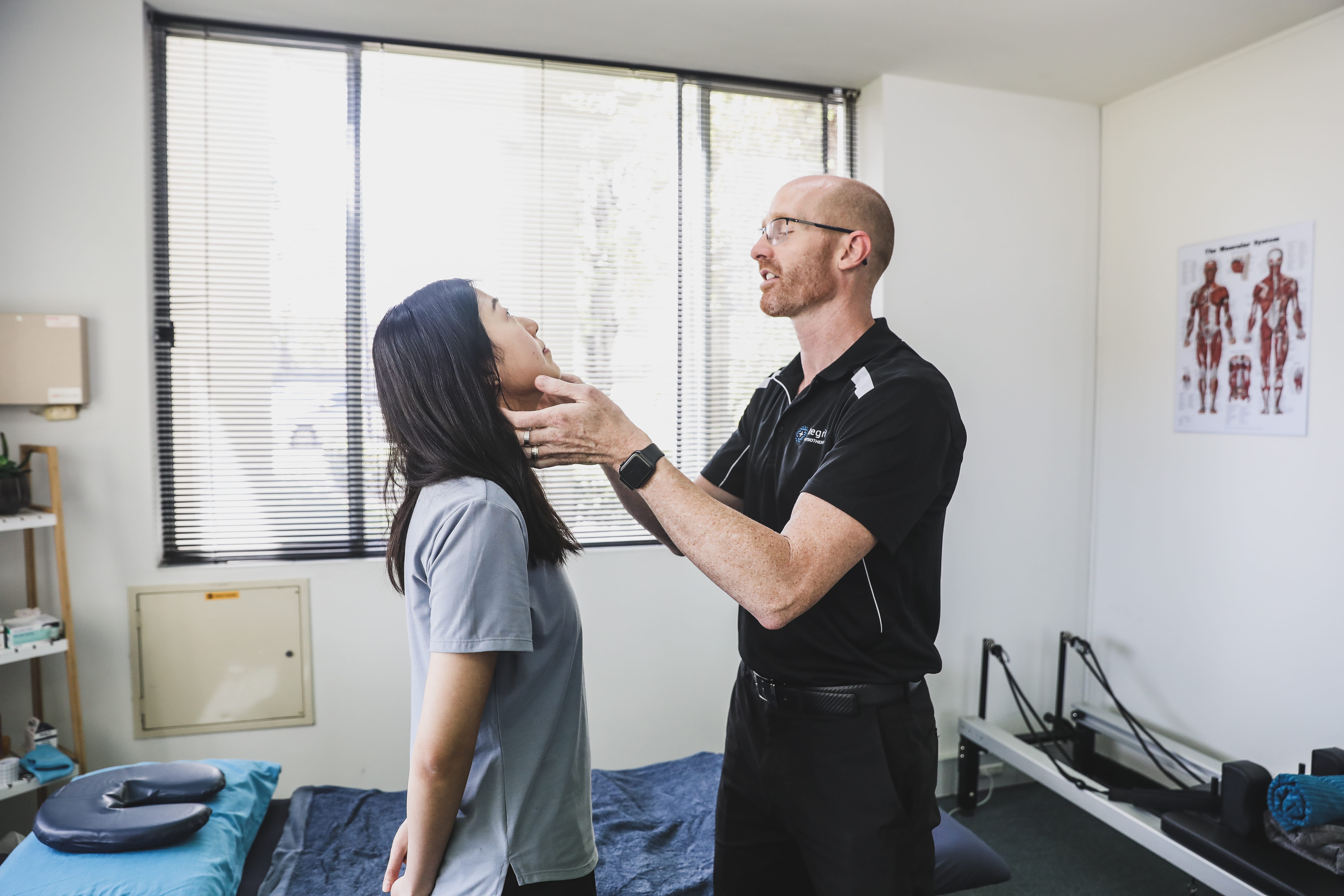
Physiotherapy focuses on improving how your jaw joint and muscles work together, not just settling symptoms, but addressing what’s driving them in the first place.
- Hands-on treatment – Gentle manual therapy techniques can help improve movement in the jaw joint and reduce stiffness or discomfort.
- Trigger point release – Targeting tight areas in the jaw muscles can relieve tension and reduce clicking linked to muscle imbalance.
- Jaw-specific exercises – Tailored exercises help retrain your jaw movement, improve control, and support smoother opening and closing.
- Postural correction – Improving postural mobility through the neck and upper back can reduce strain on the jaw and support better overall function.
- Education around habits – Guidance on reducing clenching and grinding, along with everyday modifications, helps protect the joint.
- Long-term management strategies – The focus isn’t just short-term relief, but helping you understand your condition and prevent it from coming back.
At Integrity Physiotherapy, your treatment starts with a thorough assessment of your jaw movement, muscle tension, and contributing factors — so we understand exactly why your jaw is clicking before we begin. From there, we guide you through a personalised plan that combines hands-on care with simple, practical strategies you can use day to day at home, so you’re not just relying on treatment, but improving how your jaw functions long term.
When to seek professional help
If your jaw clicking isn’t settling or is starting to affect your day-to-day life, it’s a good time to get it checked. The longer TMJ symptoms go unaddressed, the more ingrained the movement patterns can become, which is why acting early matters.
You may benefit from professional support if:
- The clicking is ongoing or getting worse – Especially if it’s becoming more frequent or noticeable over time.
- You’re experiencing pain or discomfort – Pain in the jaw joint, face, or surrounding muscles that doesn’t ease on its own.
- Your jaw movement feels restricted – Difficulty opening your mouth fully, or a feeling of stiffness when chewing or talking.
- Your jaw locks or catches – Even occasional locking can be a sign the joint isn’t moving properly.
- It’s impacting everyday activities – Eating, speaking, or even yawning comfortably becomes difficult.
Take the next step toward a more comfortable jaw
Jaw clicking can feel strange, but in most cases it’s something that can be managed with the right approach. Understanding what’s driving it is the first step toward improving how your jaw feels and functions.
If your symptoms aren’t settling, or you’d like a clearer plan, our team offers personalised TMJ physiotherapy in Perth, focused on hands-on treatment, movement, and long-term results.
Book an appointment today and let’s help you get your jaw moving more comfortably again.
Disclaimer
This article is intended for general information only. Symptoms, causes, and treatment options for jaw clicking and TMJ-related conditions can vary from person to person. For an accurate diagnosis and personalised advice, please consult your Physiotherapist
FAQs
Why does my jaw click but it doesn’t hurt?
If your jaw clicks without pain, it’s often due to a small shift in how the disc inside the TMJ is moving. In many cases, this isn’t serious and doesn’t require treatment, but it’s still worth keeping an eye on if other symptoms develop.
Can jaw clicking go away on its own?
Yes, in some cases jaw clicking can settle on its own, especially if it’s related to temporary muscle tension or minor irritation. Simple changes like reducing strain on the jaw, avoiding habits like chewing gum or temporarily avoiding challenging foods can help with recovery.
Is jaw popping a sign of TMJ disorders?
Jaw popping can be linked to TMJ disorders, particularly if it’s combined with pain, stiffness, or difficulty opening your mouth. On its own, it doesn’t always mean there’s a problem, but it can be an early sign to pay attention to.
Should I stop chewing gum if my jaw clicks?
If your jaw is clicking, it’s a good idea to limit or avoid chewing gum. Repetitive chewing can place extra stress on the jaw joint and surrounding muscles, which may make symptoms worse over time.
Suffering from jaw pain? The team at Integrity can help.

Leslie Trigg
Director & Senior Physiotherapist, Integrity PhysiotherapyLeslie Trigg has over 19 years of clinical experience and is the Director and Senior Physiotherapist at Integrity Physiotherapy. He graduated with a degree in Human Biology (Anatomy and Physiology) from Curtin University in 2001 before completing a Master of Physiotherapy in 2007. Leslie has a special interest in persistent pain, jaw disorders, dizziness and complex musculoskeletal conditions, combining hands-on physiotherapy with evidence-informed, nervous system–based approaches to help people recover from pain and return to the activities they enjoy. Outside work, he enjoys mountain biking, strength training, yoga and spending time with his family.