What is TMJ and TMD?
Simple explanations and treatment options for jaw pain and dysfunction.The temporomandibular joints (TMJ) connect your jaw to your skull and help you chew, speak, yawn, and make facial expressions. These joints and muscles are used constantly throughout the day and can sometimes become irritated, stiff, or painful.
When pain or dysfunction affects the jaw joint or surrounding muscles, it’s commonly referred to as a temporomandibular disorder (TMD). TMD can cause symptoms such as jaw pain, clicking, headaches, muscle tension, or difficulty opening and closing the mouth comfortably.
TMD is a common condition, and many people respond well to targeted physiotherapy treatment that can help reduce pain, improve jaw movement, and restore normal function.
TMD can affect the jaw joints, surrounding muscles, and nearby areas such as the ears, temples, face, and neck. Symptoms can range from mild jaw tension through to persistent pain, clicking, headaches, or difficulty chewing comfortably.
Because the jaw works closely with many muscles and joints around the head and neck, people often experience symptoms beyond the jaw itself. Below are some of the most common signs of TMJ dysfunction and jaw-related pain.
Pain or tenderness around the jaw joint, particularly near the ears, is one of the most common symptoms of TMD. The pain may feel dull and constant or sharp during activities such as chewing, yawning, or talking. Some people also notice pain spreading into the cheeks, temples, or side of the face.
Some people notice clicking, popping, or grinding sounds when opening or closing the mouth. These noises may occur without pain, but in some cases they can be associated with jaw stiffness, discomfort, or changes in jaw movement. Joint noises can occur when the structures inside the jaw joint aren’t moving smoothly together.
TMD can make everyday activities such as chewing, yawning, or speaking feel uncomfortable. Some people experience stiffness or difficulty opening the mouth fully, while others notice the jaw feels tight, uneven, or occasionally locked. Symptoms may become more noticeable when eating chewy or firm foods.
Jaw dysfunction can sometimes contribute to tension headaches, temple pain, facial aching, or tightness through the neck and shoulders. Because the jaw muscles work closely with the muscles of the head and neck, tension in one area can often affect another. Some people may also experience ear discomfort, pressure, or ringing sensations alongside jaw pain.
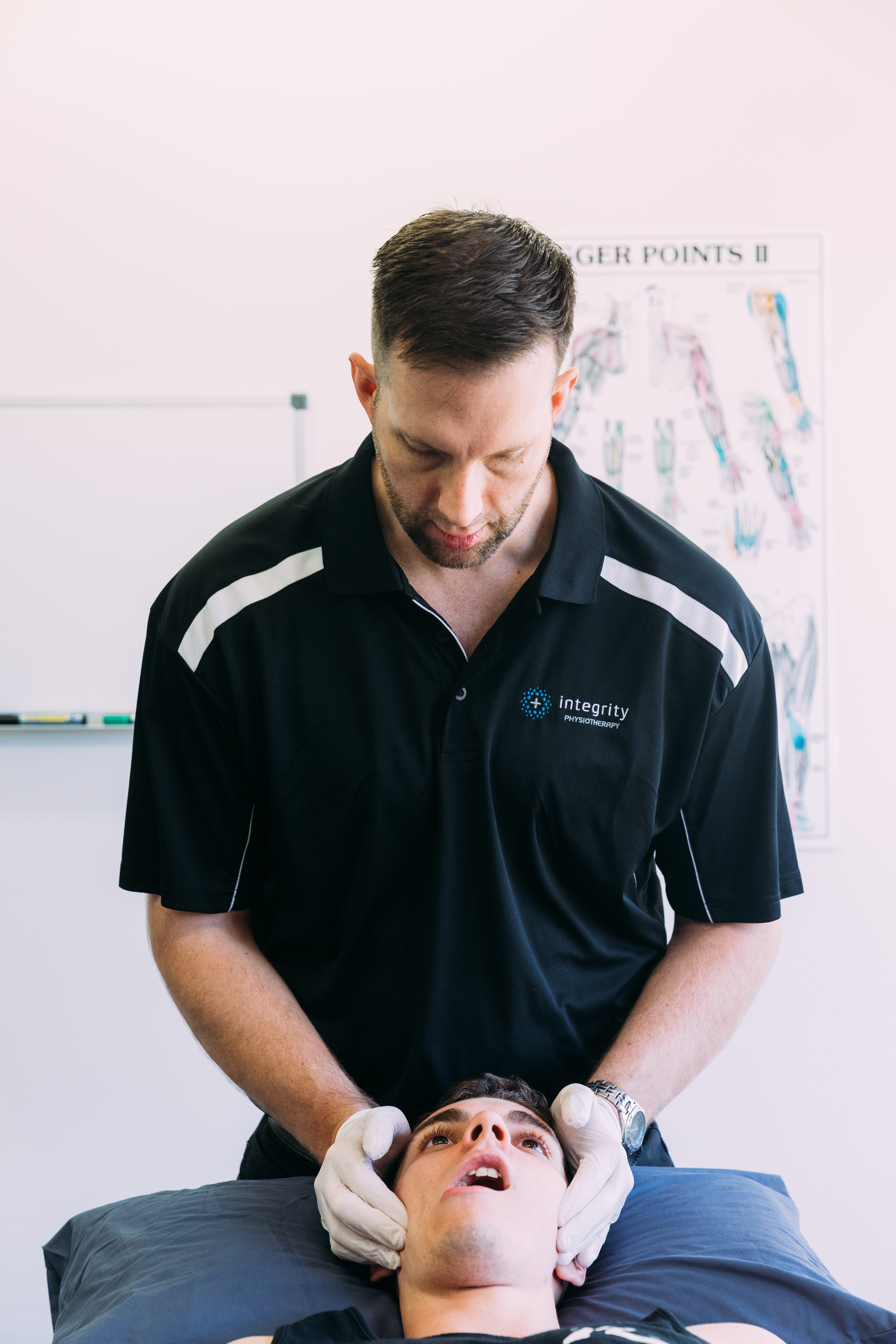
Common causes of TMD
TMD can develop for several different reasons, and in many cases, symptoms are influenced by a combination of joint irritation, muscle tension, posture, stress, or changes in jaw movement over time. Understanding what may be contributing to your symptoms can help guide the most effective treatment approach.
Teeth grinding or clenching (Bruxism)
Teeth grinding and jaw clenching place extra pressure on the jaw joints and surrounding muscles. This often happens during sleep or periods of stress and can lead to jaw pain, headaches, muscle tension, and stiffness, particularly in the morning.
Stress and muscle tension
Stress and anxiety can increase tension through the jaw, face, neck, and shoulders. Many people unknowingly tighten their jaw muscles throughout the day, which can contribute to ongoing TMJ irritation and discomfort.
Jaw injury or trauma
A direct impact to the jaw, dental procedures, whiplash injuries, or excessive strain on the jaw joint can sometimes trigger TMD symptoms. Even minor injuries may affect how the jaw moves and functions over time.
Joint irritation or arthritis
Like other joints in the body, the TMJ can become irritated or affected by arthritis-related changes. This may contribute to stiffness, joint noises, pain, or difficulty moving the jaw comfortably.
Poor posture and neck dysfunction
The jaw, neck, and upper shoulders work closely together. Poor posture, prolonged desk work, or neck tension can sometimes affect jaw muscle function and contribute to TMJ-related symptoms.
Chewing strain and jaw overuse
Regularly chewing hard or chewy foods, nail biting, gum chewing, or excessive jaw use can overload the jaw muscles and joints, particularly if the area is already sensitive or irritated.
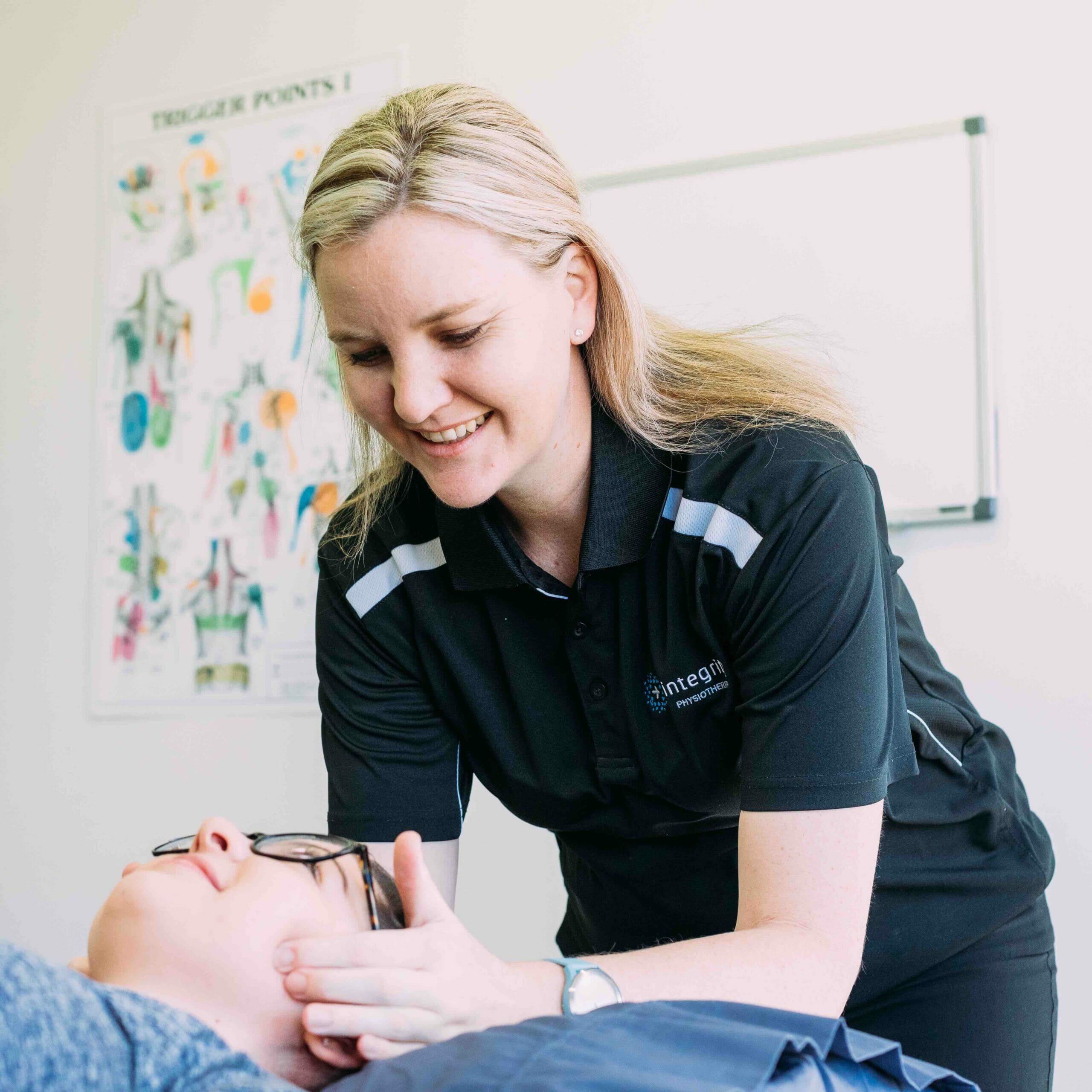
TMJ Assessment and Diagnosis
Diagnosing TMD involves understanding how your jaw moves, identifying what symptoms you’re experiencing, and assessing the muscles and joints around the jaw, face, and neck. At Integrity Physiotherapy, we take a thorough approach to jaw physiotherapy assessment so we can better understand the underlying factors contributing to your symptoms.
Jaw movement and function assessment
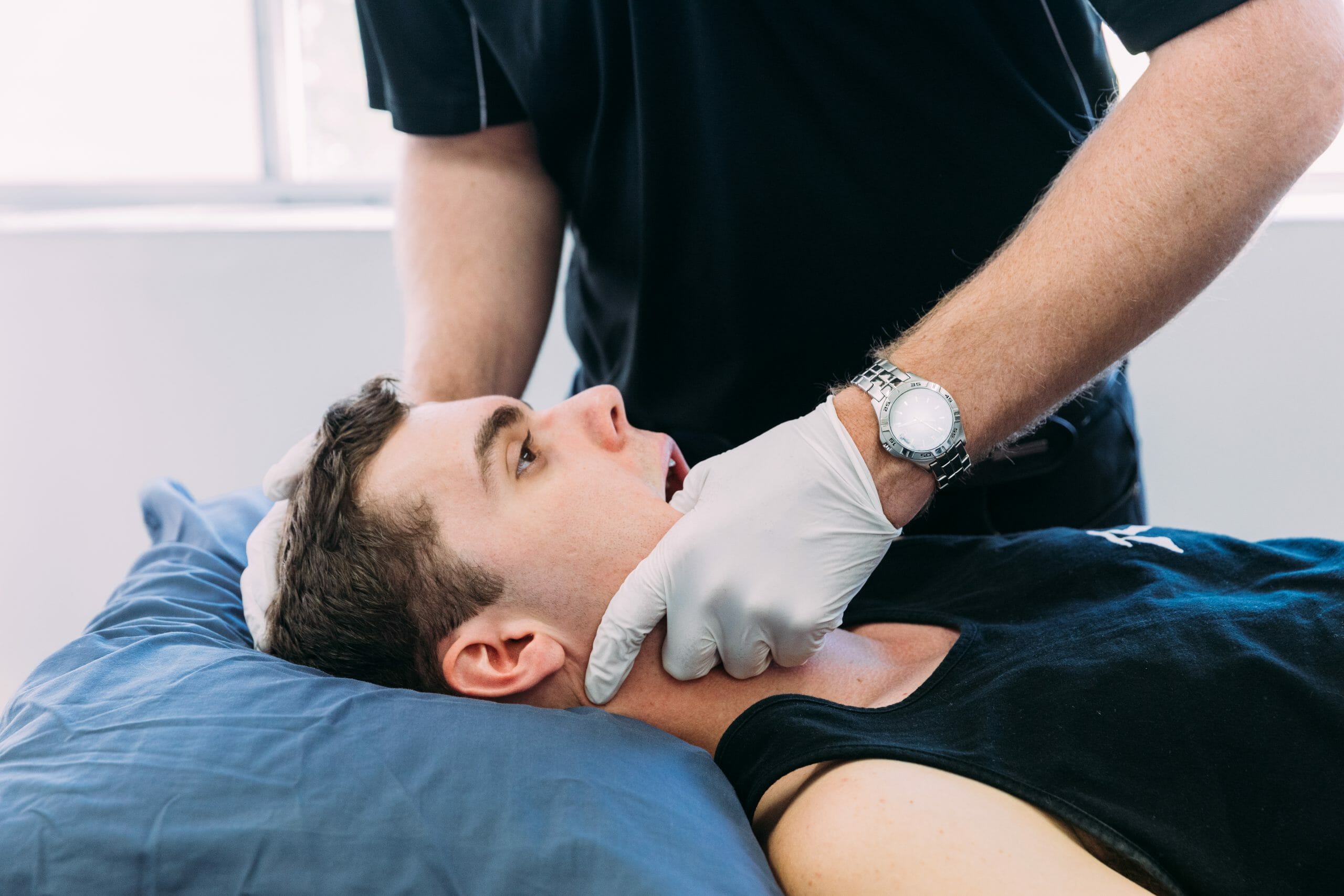
We assess how your jaw opens, closes, and moves from side to side, looking for stiffness, restriction, uneven movement, or discomfort. This helps identify how the jaw joints and muscles are functioning during everyday activities such as chewing and speaking.
Joint sounds and pain assessment
Clicking, popping, grinding, or locking of the jaw can provide important information about how the temporomandibular joint is moving. We also assess areas of tenderness and pain around the jaw, cheeks, temples, and surrounding muscles.
Neck, posture, and muscle assessment
Because the jaw works closely with the neck and upper shoulders, we also assess posture, muscle tension, and neck mobility. Tightness or dysfunction in nearby areas can sometimes contribute to ongoing jaw pain and TMJ symptoms.
Imaging and referral when needed
In some cases, imaging such as X-rays, CT scans, or MRI may be recommended to investigate the jaw joint further or rule out other conditions. If needed, we will work alongside your GP, Dentist, or Oral Medicine Specialist as part of your broader care plan.
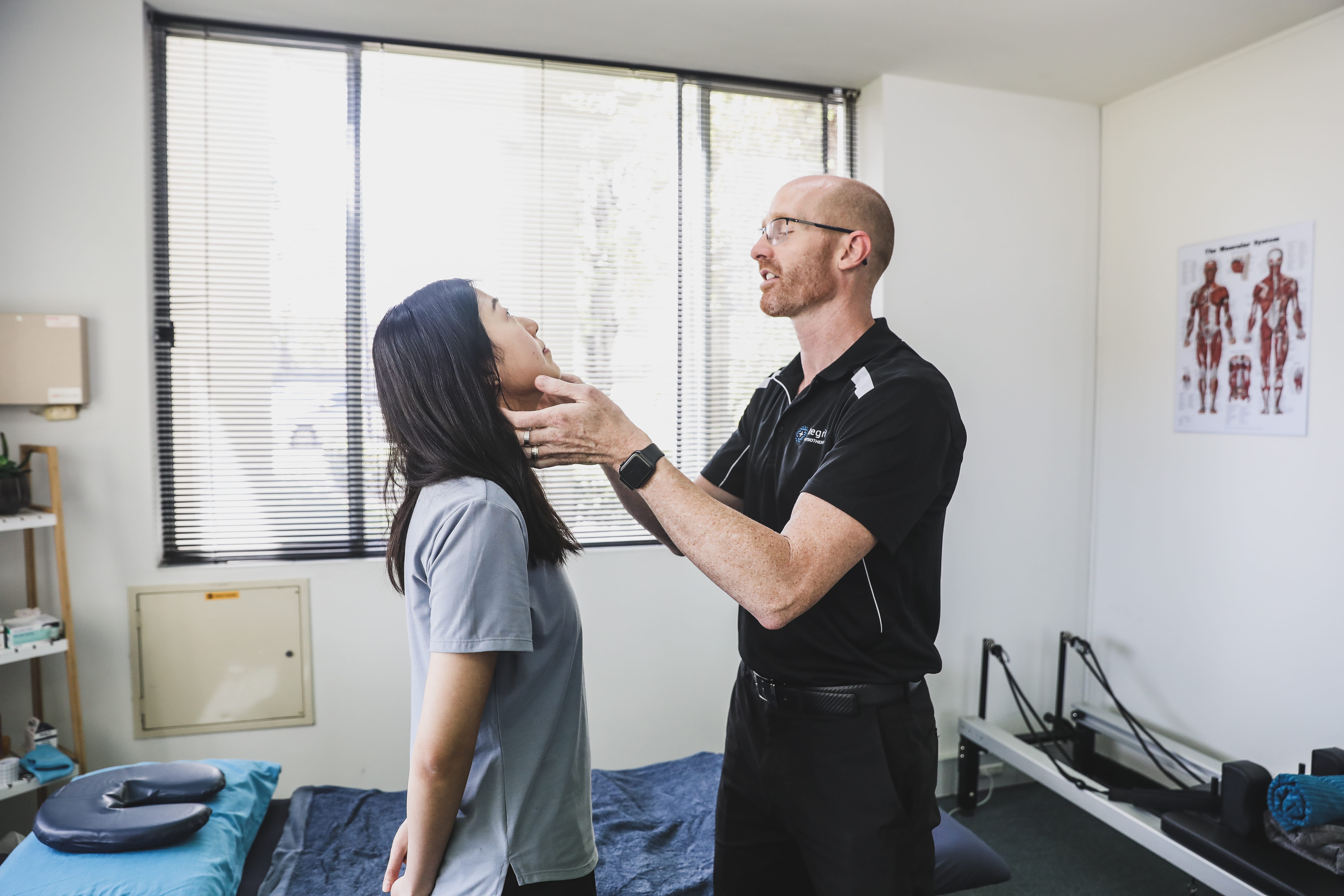
Recovery with TMJ physiotherapy
TMJ physiotherapy focuses on reducing pain, improving jaw movement, and restoring normal function through targeted hands-on treatment and rehabilitation. Because TMD often involves both the jaw joints and surrounding muscles, treatment is tailored to your symptoms, movement patterns, and recovery goals.
Many people respond well to physiotherapy for jaw pain, with gradual improvements in tension, mobility, and everyday comfort over time. Some people notice positive changes within the first few weeks of treatment, while longer-standing symptoms may take several months to fully settle.
Hands-on treatment to reduce pain
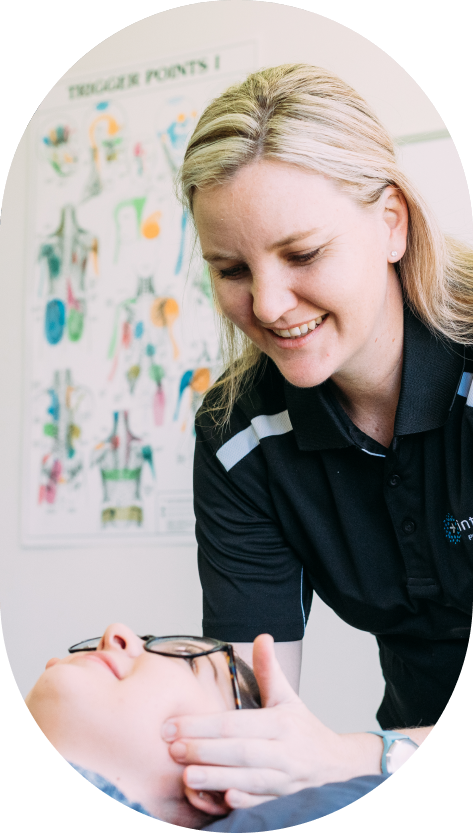
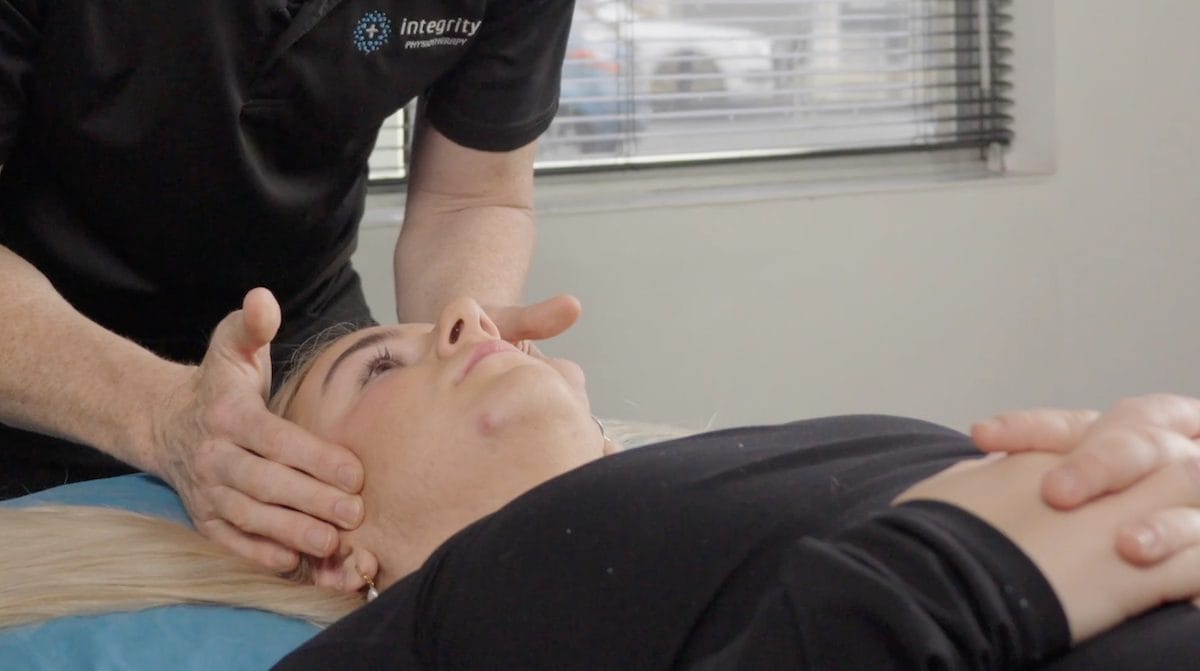
Treatment may include joint mobilisation, soft tissue massage, dry needling, or muscle release techniques to help reduce jaw tension and improve movement. Hands-on physiotherapy can be particularly helpful when the jaw feels stiff, tight, or painful during daily activities.
Improving jaw movement and function
TMD can affect how the jaw opens, closes, and moves during activities like chewing, speaking, and yawning. Physio for TMJ pain often focuses on restoring smoother jaw movement, improving muscle coordination, and reducing strain on the temporomandibular joints.
Personalised exercises and rehabilitation
Specific exercises may be prescribed to improve jaw control, posture, muscle function, and long-term stability. Your physiotherapist will tailor your rehabilitation program based on your symptoms, lifestyle, and contributing factors.
Supporting long-term recovery
Recovery timelines vary depending on the cause and severity of symptoms, but many people begin noticing improvement within weeks of starting treatment. Ongoing physiotherapy treatment, guided rehabilitation, and self-management strategies can help support long-term jaw health and reduce the likelihood of recurring symptoms.
Why choose Integrity Physio for TMJ Physiotherapy
At Integrity Physiotherapy, we understand how frustrating ongoing jaw pain and TMJ dysfunction can be. Our approach focuses on hands-on care, clear communication, and tailored treatment designed around your symptoms, lifestyle, and long-term recovery goals.
Experienced Physiotherapists
All appointments are provided by experienced physiotherapists with extensive training in treating musculoskeletal and complex pain conditions, including TMJ dysfunction and jaw pain.
Hands-on treatment from day one
We focus on practical, hands-on physiotherapy treatment from your first appointment to help reduce pain, improve jaw movement, and relieve muscle tension early in the recovery process.
Individualised treatment plans
No two cases of TMD are exactly the same. Your treatment plan is tailored to your symptoms, contributing factors, lifestyle, and recovery goals to support long-term improvement.
Experience treating TMJ and complex conditions
Our team has experience managing TMJ dysfunction, persistent jaw pain, headaches, neck tension, and related musculoskeletal conditions using evidence-based physiotherapy approaches.
Everything you need to know about physiotherapy for jaw pain and TMJ disorders.