
If you’ve ever experienced a sudden wave of dizziness that makes the room feel like it’s spinning, you’ll know how unsettling it can be. For some people, these episodes don’t just happen once. They come and go without much warning, sometimes alongside changes in hearing or a strange feeling of pressure in the ear.
It can be confusing. Is it just vertigo? Something to do with your balance? Or something more going on beneath the surface?
Conditions that affect balance and hearing can be difficult to make sense of, especially when symptoms vary from person to person. What feels like a brief dizzy spell for one person might be a much more disruptive experience for someone else, impacting work, daily routines, and even confidence in getting out and about.
In this article, we’ll walk you through what Ménière’s disease is, the symptoms to look out for, what may be causing it, and when it’s time to seek support.
What Is Ménière’s disease?
Ménière’s disease is a condition that affects the inner ear, which plays a key role in both your balance and hearing. It typically affects one affected ear, although in some cases it can involve both.
At its core, Ménière’s disease is linked to changes in the way fluid behaves inside the inner ear. This fluid, known as endolymph, helps your body detect movement and sound. When the balance of this fluid is disrupted, it can interfere with the signals being sent to your brain, leading to a mix of symptoms that can come and go.
Because it affects both balance and hearing, Ménière’s disease can feel unpredictable and difficult to manage at times. The severity and frequency of symptoms can vary from person to person, and they may change over time.
And while it’s considered a long-term condition, there are a range of treatment options and support strategies that can help manage symptoms and improve day-to-day function.
Common Ménière’s disease symptoms
One of the more challenging parts of Ménière’s disease is how symptoms can come and go. These episodes, often called vertigo attacks, can feel quite intense and may happen without much warning.
Some of the most common Ménière’s disease symptoms include:
- Vertigo attacks
A sudden spinning sensation that can make you feel off balance or unsteady. These episodes typically last anywhere from 20 minutes to 12 hours, and in more severe cases can be accompanied by nausea and vomiting.
- Hearing loss
This often starts as fluctuating hearing changes in the affected ear, where sounds may seem muffled or distorted. Over time, hearing loss can become more persistent.
- Ringing in the ears (tinnitus)
Many people describe this as a buzzing, ringing, or roaring sound. You might see this referred to as ringing in the ears tinnitus, and it can vary in intensity from mild to quite noticeable.
- Aural fullness
A feeling of pressure or fullness in the ear, almost like your ear is blocked or needs to “pop”.
For some people, there may also be subtle warning signs before an episode, such as increased tinnitus or a change in hearing. After an attack, it’s common to feel tired or a bit off balance for a while.
Because these symptoms affect both balance and hearing, they can be unpredictable and disruptive, especially if you’re not sure when the next episode might happen.
What causes Ménière’s disease?
The exact cause of Ménière’s disease isn’t fully understood, which can make it frustrating when you’re looking for clear answers. What we do know is that it’s closely linked to a build-up of fluid in the inner ear, specifically a fluid called endolymph.
This fluid plays an important role in how your body senses movement and sound. When the balance or pressure of this fluid changes, it can disrupt how signals are sent between your inner ear and your brain. That disruption is what can lead to symptoms like vertigo, hearing changes, and that feeling of fullness in the ear.
There isn’t usually one single cause. Instead, it’s thought to be a combination of factors that may contribute, including:
-
-
- Issues with how fluid drains from the inner ear
- A history of ear, nose and throat conditions or infections
- Immune system responses
- Genetic factors (it can run in some families)
- Migraines or head trauma
-
For many people, it’s not always clear why symptoms begin, and that uncertainty is completely normal. The important thing to know is that while the underlying cause may vary, there are still ways to manage symptoms and reduce how much they affect your day-to-day life.
Stages of Ménière’s disease
Ménière’s disease doesn’t always follow a perfectly predictable path, but symptoms often progress over time. Understanding the stages of Ménière’s can help you make sense of how things may change.
Early stage
In the early stage, symptoms tend to come and go. You might experience sudden vertigo attacks, often alongside temporary hearing loss, ringing in the ears (tinnitus), or a feeling of fullness in the affected ear. Between episodes, hearing may return to normal.
Middle stage
As the condition progresses, vertigo attacks may still occur, but changes in hearing become more noticeable. Hearing loss and tinnitus can become more consistent, rather than just appearing during episodes. Some people find the vertigo becomes slightly less intense, but the overall impact on balance and hearing is more ongoing.
Late stage
In later stages, vertigo attacks may become less frequent, but balance issues can persist. You might feel unsteady, especially in low-light environments or on uneven surfaces. Hearing loss is often more permanent at this stage, and the ear may continue to feel full or blocked.
How Ménière’s disease differs from other vertigo conditions
Not all dizziness or vertigo is caused by Ménière’s disease, which is why getting the right diagnosis is so important.
Conditions such as BPPV (benign paroxysmal positional vertigo) or vestibular neuritis can also cause vertigo, but they tend to behave quite differently. For example, BPPV is usually triggered by specific head movements and often lasts only seconds, while vestibular neuritis may cause a more constant feeling of dizziness without the same changes in hearing.
What sets Ménière’s disease apart is that it affects both balance and hearing. Alongside vertigo attacks, people often experience hearing loss, ringing in the ears (tinnitus), and aural fullness in the affected ear. The episodes also tend to last longer, rather than just brief moments.
Because symptoms can overlap between conditions, it’s not always easy to tell the difference on your own. That’s where a proper assessment, including a hearing test and guidance from an ear, nose and throat specialist or physiotherapist, can help clarify what’s going on.
Treatment options for Ménière’s disease
While there’s currently no cure for Ménière’s disease, there are a range of treatment options that can help manage symptoms and reduce how often vertigo attacks occur. The right approach often depends on how severe your symptoms are and how they’re affecting your daily life.
1. Medical management
Your GP or ear, nose and throat specialist may prescribe medications to help manage vertigo attacks, reduce dizziness, or control nausea and vomiting during episodes.
2. Diet and lifestyle changes
Some people find that reducing salt intake, limiting caffeine and alcohol, and managing stress can help regulate fluid in the inner ear and reduce symptom flare-ups.
3. Hearing support
If hearing loss becomes more persistent, a hearing aid may be recommended to help improve communication and day-to-day function.
4. Vestibular rehabilitation
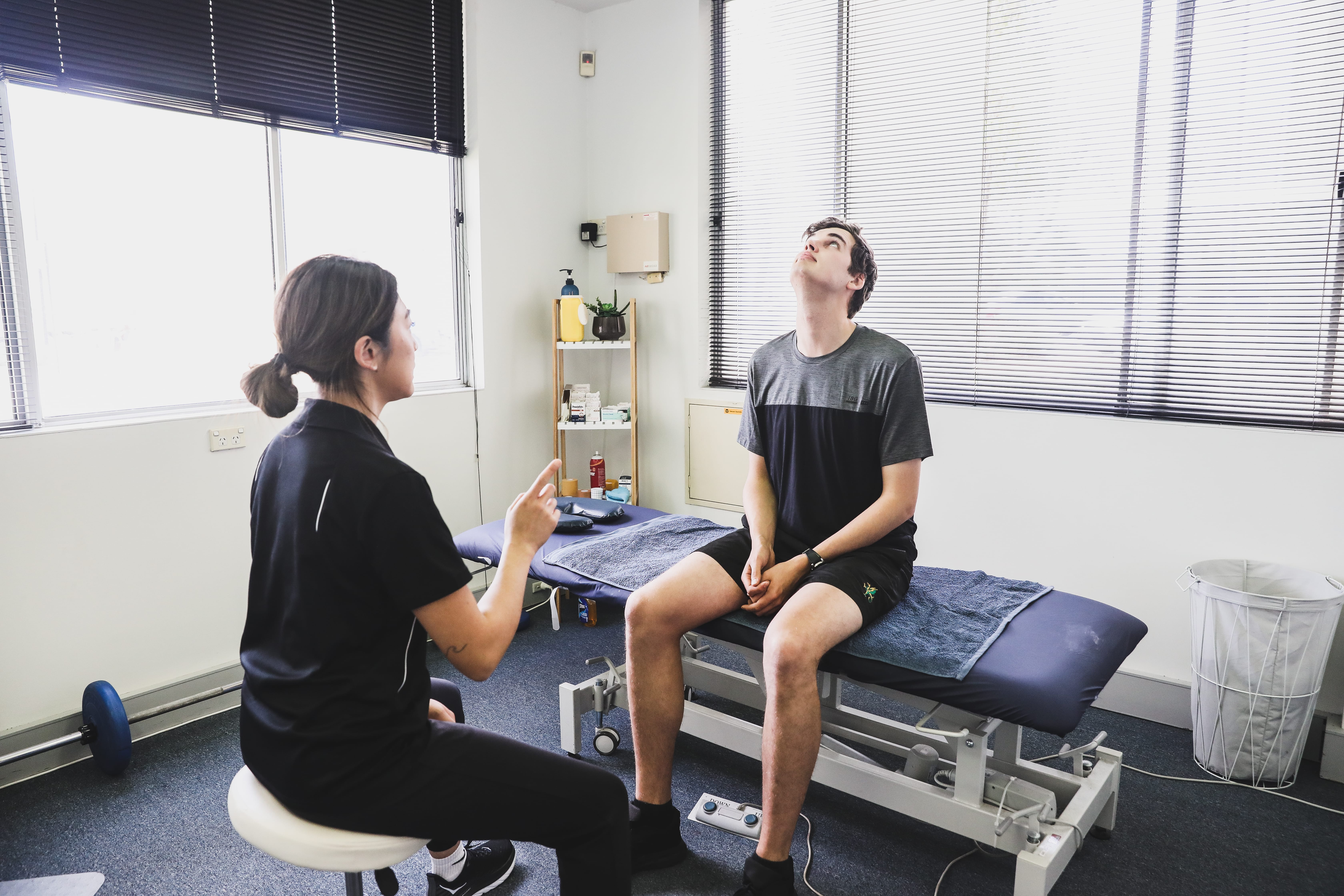
This is a specialised form of physiotherapy that focuses on improving balance, helping your body adapt to changes in the inner ear.
5. Further medical treatments (if needed)
In more severe cases, treatments such as injections or surgery may be considered, usually under the guidance of a specialist.
How physiotherapy can help with Ménière’s disease

Ménière’s disease is a medical condition of the inner ear, and while physiotherapy does not treat the underlying cause or prevent vertigo attacks, it plays a key role in managing the secondary effects. Vestibular rehabilitation helps you manage balance and dizziness between episodes. It focuses on retraining your brain to compensate for inconsistent vestibular input, helping it rely more effectively on vision and proprioception (sense of body position). By recalibrating the vestibulo-ocular reflex and reducing motion sensitivity, physiotherapy supports the recovery of confidence and movement when you are not experiencing an attack.
Treatment may include:
-
-
- Balance retraining exercises
-
To help you feel more stable when standing, walking, or moving through different environments
-
-
-
- Gaze stabilisation exercises
-
-
Designed to improve how your eyes and head work together, which can reduce dizziness during movement
-
-
-
-
- Gradual exposure to movement
-
-
-
Helping your body become less sensitive to positions or activities that might trigger symptoms
-
-
-
-
- Strength and coordination work
-
-
-
To support overall stability and reduce the risk of falls At Integrity Physiotherapy, we take the time to understand what’s driving your symptoms and how they’re showing up in your daily life. That includes looking at how your balance and hearing are being affected, along with any changes in confidence or movement.
At Integrity Physiotherapy, we take the time to understand what’s driving your secondary symptoms and how they’re showing up in your daily life. That includes looking at how your balance is being affected, along with any changes in confidence or movement. From there, we develop a personalised treatment plan designed to support your recovery and help you feel more steady, capable, and in control over time.
When should you seek help?
It’s a good idea to seek help if you’re experiencing symptoms that are ongoing, worsening, or starting to affect your daily life.
You should consider seeing a GP, ear, nose and throat specialist, or physiotherapist if:
-
-
-
-
- You’re having repeated vertigo attacks, especially those lasting 20 minutes to 12 hours
- You notice changes in your hearing loss or tinnitus
- You feel persistent imbalance or unsteadiness between episodes
- Symptoms are making it difficult to work, drive, or carry out everyday tasks
- You’re unsure what’s causing your dizziness or want clarity on your symptoms
-
-
-
Getting assessed early can help rule out other conditions and guide you toward the right treatment options. A hearing test and further assessment may be recommended to better understand what’s going on.
Supporting your recovery with the right care
Living with Ménière’s disease can feel unpredictable, but with the right support, it’s possible to regain a sense of control and confidence in your day-to-day life.
At Integrity Physiotherapy, we provide tailored vestibular physiotherapy in Perth, focused on understanding your symptoms and helping you improve your balance, stability, and movement over time. Every treatment plan is built around you, your goals, and how your symptoms are affecting your daily routine.
Book an appointment today, and let’s work together to help you feel more steady, confident, and in control again.
Disclaimer
This article is intended for general information only. Symptoms, causes, and treatment options for Ménière’s disease can vary from person to person. For an accurate diagnosis and personalised advice, please consult your GP or a qualified healthcare professional.
Suffering from vertigo and dizziness? The team at Integrity can help.

Leslie Trigg
Director & Senior Physiotherapist, Integrity PhysiotherapyLeslie Trigg has over 19 years of clinical experience and is the Director and Senior Physiotherapist at Integrity Physiotherapy. He graduated with a degree in Human Biology (Anatomy and Physiology) from Curtin University in 2001 before completing a Master of Physiotherapy in 2007. Leslie has a special interest in persistent pain, jaw disorders, dizziness and complex musculoskeletal conditions, combining hands-on physiotherapy with evidence-informed, nervous system–based approaches to help people recover from pain and return to the activities they enjoy. Outside work, he enjoys mountain biking, strength training, yoga and spending time with his family.