

Ever felt like the room is spinning, even though you’re sitting or lying still?
Vertigo can be unsettling and hard to predict. Understanding what may be causing it is the first step towards knowing whether physiotherapy could help.
Looking for treatment information? Learn more about our vestibular physiotherapy in Perth.
What is vertigo?
Vertigo is the false sensation that you or the space around you is moving, even when you’re still. It often feels like spinning or swaying.
This differs from general dizziness, which may feel more like light-headedness or faintness. Vertigo is linked to the vestibular system, which helps your brain understand movement and balance.
When signals from this system become disrupted, you may feel movement that isn’t actually happening. Vertigo is a symptom rather than a condition itself, so understanding the cause is important.
What can cause vertigo?
Vertigo can have several causes, and the pattern of your symptoms often provides useful clues. Some conditions affect the inner ear, while others involve the nerves or systems that help control balance.
Benign Paroxysmal Positional Vertigo (BPPV)
BPPV happens when tiny calcium crystals move into the wrong part of the inner ear. This can trigger a sudden spinning sensation when you roll over in bed, look up or turn your head. Episodes are usually brief, but they can feel intense while they last.
Vestibular neuritis and labyrinthitis
Vestibular neuritis involves inflammation of the nerve that carries balance signals from the inner ear. Labyrinthitis affects the inner ear itself and can also cause hearing changes. Both can cause sudden, intense vertigo followed by ongoing unsteadiness.
Cervical or neck-related dizziness
Some people experience dizziness alongside neck pain or restricted movement. This is often described as cervical dizziness, although diagnosis can be complex because similar symptoms may come from the inner ear or another medical cause. Physiotherapists trained in musculoskeletal and vestibular dysfunction are able to determine this from a clinical assessment.
Vestibular migraine
Vestibular migraine can cause vertigo even when a strong headache is not present. Symptoms may become more noticeable with movement or in visually busy places, such as shopping centres.
Anxiety, low blood pressure and low blood sugar
Not every dizzy sensation is true vertigo. Anxiety, low blood pressure or low blood sugar can cause light-headedness or weakness rather than a clear spinning feeling. These symptoms may still affect balance, but the cause and treatment approach can be different.
Other causes
Medication side effects and some neurological conditions can also cause dizziness or vertigo. New or severe symptoms should be medically assessed.
How does vertigo relate to physiotherapy?
Physiotherapy is often associated with muscles, joints and sports injuries, but it can also help with conditions that affect balance.
Vestibular physiotherapy focuses on how the inner ear and balance system respond to movement. It can be used for several common causes of vertigo, including BPPV and vestibular neuritis.
So, can physio help with vertigo? In most cases, yes. The treatment approach depends on what is causing the symptoms, which is why the assessment comes first.
How can physiotherapy help with vertigo?
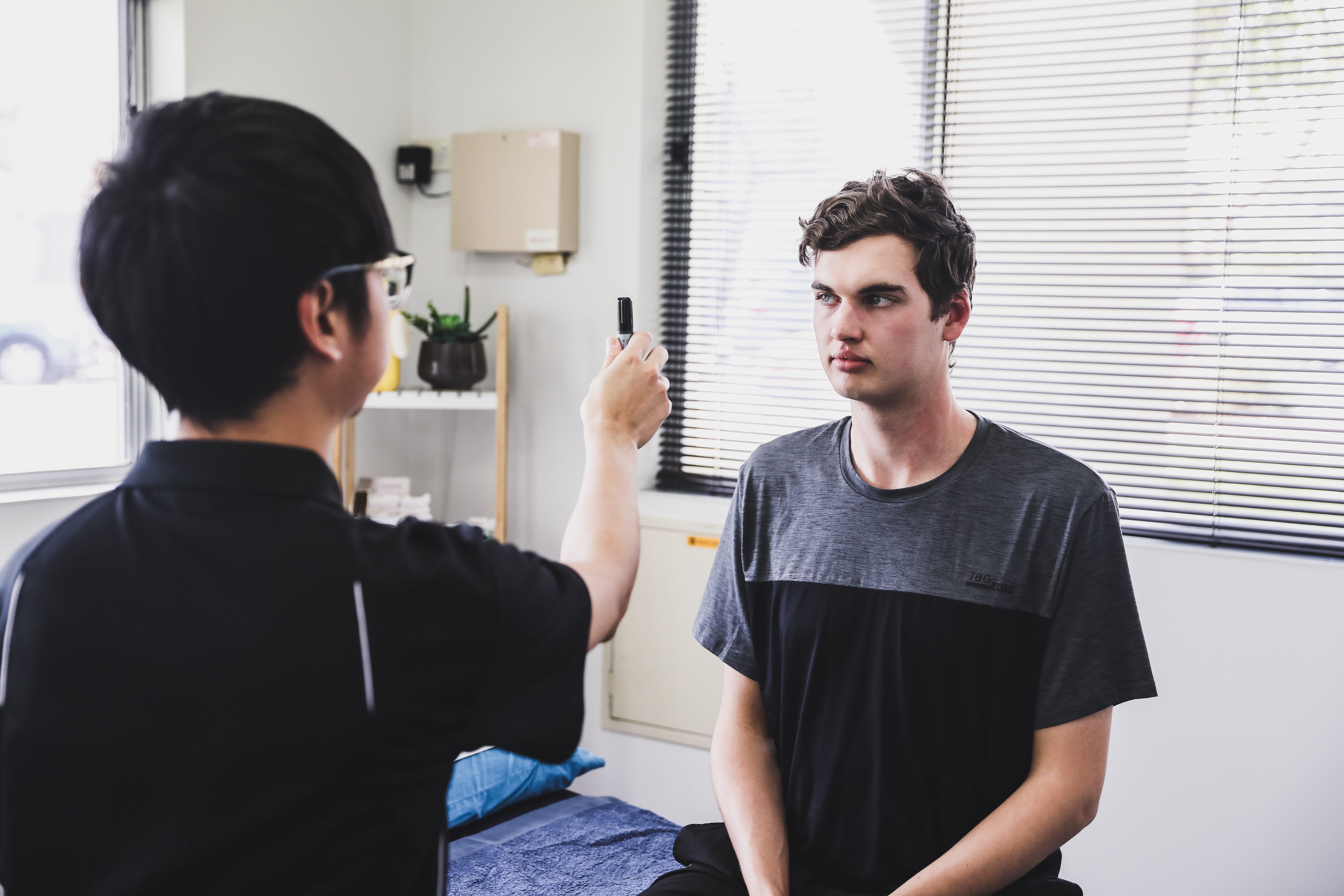
The right physiotherapy approach depends on what is causing the vertigo. After assessing your symptoms and balance, your vestibular trained physiotherapist can choose techniques suited to your presentation.
Epley manoeuvre
The Epley manoeuvre is mainly used for BPPV affecting certain parts of the inner ear. It uses a sequence of guided head and body positions to move displaced crystals out of the affected canal. Because other conditions can produce similar symptoms, testing should confirm that BPPV is present before the manoeuvre is used.
Brandt-Daroff exercises
Brandt-Daroff exercises involve moving repeatedly between set positions. They’re usually completed at home after clear instruction and are most commonly used for BPPV. They’re not a universal vertigo exercise, so their suitability depends on the findings of an assessment.
Vestibular rehabilitation therapy
Vestibular rehabilitation therapy uses a personalised exercise program to challenge the balance system in a controlled way. Training can focus on improving steadiness and building tolerance to head movement. Exercises are adjusted over time according to the person’s symptoms and response.
Gaze stabilisation exercises
Gaze stabilisation exercises train the eyes to remain focused while the head is moving. They are used when a vestibular problem makes vision feel blurred or unsettled during movement. The aim is to improve visual stability so everyday movement becomes easier to tolerate.
Habituation and functional training
Habituation uses repeated exposure to movements that bring on dizziness, with the challenge introduced gradually. Functional training then applies this progress to everyday tasks. This might involve bending down or turning to look behind you. Practice can also extend to walking through visually busy environments.
When should you see a physio for vertigo?
A physiotherapy assessment can be useful when vertigo keeps returning or begins affecting your balance during everyday movement.
Seek urgent medical care first if dizziness appears with:
- a sudden, severe headache
- weakness or numbness
- difficulty speaking
- fainting
- sudden hearing loss
- severe difficulty walking
If none of these warning signs are present, a vestibular trained physiotherapist can assess your symptoms and explain whether physiotherapy is suitable.
Get the right support for recurring vertigo
Physiotherapy can help with several common causes of vertigo, but the right treatment depends on what’s contributing to your symptoms.
Learn more about our vestibular physiotherapy in Perth, or book an appointment with our Como team for an assessment.
Suffering from vertigo? The team at Integrity can help.

Leslie Trigg
Director & Senior Physiotherapist, Integrity PhysiotherapyLeslie Trigg has over 19 years of clinical experience and is the Director and Senior Physiotherapist at Integrity Physiotherapy. He graduated with a degree in Human Biology (Anatomy and Physiology) from Curtin University in 2001 before completing a Master of Physiotherapy in 2007. Leslie has a special interest in persistent pain, jaw disorders, dizziness and complex musculoskeletal conditions, combining hands-on physiotherapy with evidence-informed, nervous system–based approaches to help people recover from pain and return to the activities they enjoy. Outside work, he enjoys mountain biking, strength training, yoga and spending time with his family.