

Key Takeaways
- Recurring lower back pain is usually caused by small stresses building up over time rather than a single injury.
- Lifestyle factors such as sitting, poor recovery, stress, and muscle weakness often trigger flare-ups.
- Physio for lower back pain focuses on addressing the root causes and building long-term resilience.
We’re sure you know the pattern.
Your lower back finally starts to feel better. You stop thinking about it. You get on with your week. Then something small triggers it, and the pain returns.
It’s frustrating. And after a while, it can start to feel like your back just can’t be trusted.
But here’s the reassuring part. Recurring lower back pain is incredibly common. And in most cases, it doesn’t mean your back is damaged or getting worse. It usually means there’s something in the bigger picture that hasn’t been addressed yet.
Why lower back pain often comes and goes
Recurring lower back pain is usually the result of how your body handles everyday load. Things like sitting, lifting, bending, working and exercising all place stress on the lower back. When that load builds beyond what your body is currently conditioned for, symptoms can flare.
Here’s what we commonly see contributing to flare-ups.
- Load accumulation
Recurring lower back pain is often caused by small physical stresses building up over time. Sitting, lifting, bending, training, parenting and long workdays all add load.
- It’s rarely one big injury
Most flare-ups aren’t caused by a single dramatic event. They’re usually the result of repeated minor strain stacking up.
- Disc degeneration and arthritis are common
Scan findings like disc degeneration are often part of normal ageing. Many people with these changes have no pain at all. Structural changes may contribute, but they are rarely the whole story behind recurring lower back pain.
- Muscle deconditioning
If your core, glutes and spinal support muscles are not strong enough for your daily demands, your lower back becomes overloaded more easily.
- Nervous system sensitivity
After an episode of back pain, your body can become more protective. This increased sensitivity means flare-ups can happen even without new damage. Pain does not automatically equal injury. Fear or worry about damaging the back can also make the nervous system more protective, which may amplify pain even when no new injury has occurred.
Recurring lower back pain is influenced by strength, movement habits, stress levels, sleep quality and overall life load. When one of these shifts occurs, symptoms may return.
Common triggers of recurring lower back pain
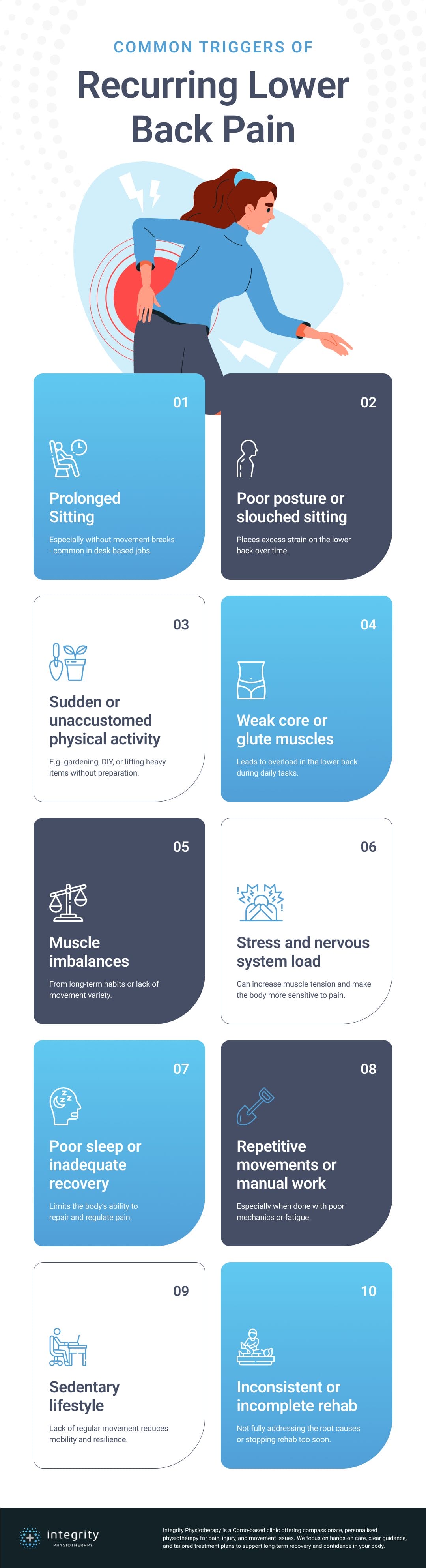
1. Prolonged sitting
Long periods of sitting, especially without movement breaks, place sustained pressure on the lower spine. Over time, this can put pressure on the discs that act as shock absorbers in your spine.
Desk-based work is now one of the biggest risk factors for people with back pain, particularly when combined with low activity levels.
2. Poor posture or slouched sitting
Slouched sitting increases strain on the discs and surrounding tissues of the spine. While posture alone is rarely the sole cause, spending hours in one position can increase the risk of developing recurring lower back pain.
3. Sudden or unaccustomed physical activity
A big weekend of gardening. Moving house. A return to the gym after months off.
Sudden spikes in activity are a common trigger. Your back may be capable, but if the load exceeds what it is conditioned for, flare-ups can occur.
4. Weak core or glute muscles
Your core and glute muscles support the spine during daily activities like lifting, bending and walking. When these muscles are deconditioned, the lower back takes on more strain.
Over time, this can contribute to chronic back pain patterns.
5. Muscle imbalances
Repeated one-sided movements, manual work, or sport-specific training can create muscle imbalances. These change how force moves through the spine and may increase irritation in certain areas.
6. Stress and nervous system load
Stress increases muscle tension and heightens pain sensitivity.
When stress levels are high, people with back pain often notice symptoms are worse. This is because the nervous system becomes more reactive, which can increase pain production even without a new injury.
7. Poor sleep or inadequate recovery
Sleep plays a critical role in pain management and tissue recovery. Inadequate sleep can increase inflammation and reduce your body’s ability to cope with physical stress.
Over time, poor recovery can increase the risk of developing recurring lower back pain.
8. Repetitive movements or manual work
Jobs that involve bending, twisting or lifting repeatedly can overload the lower spine, especially when fatigue sets in.
Without proper conditioning and recovery, this places people in a higher risk category for ongoing flare-ups.
9. Sedentary lifestyle
A lack of regular movement reduces spinal mobility and muscular endurance. Staying active is one of the most effective protective factors for people with back pain.
Maintaining a healthy weight also reduces strain on the spine and may lower mechanical stress contributing to symptoms.
10. Inconsistent or incomplete rehabilitation
One of the biggest reasons recurring lower back pain persists is stopping rehab too soon.
Pain may settle, but if strength, endurance and movement control are not fully restored, the underlying risk factors remain. This makes flare-ups more likely in the future.
How physiotherapy helps reduce recurring lower back pain
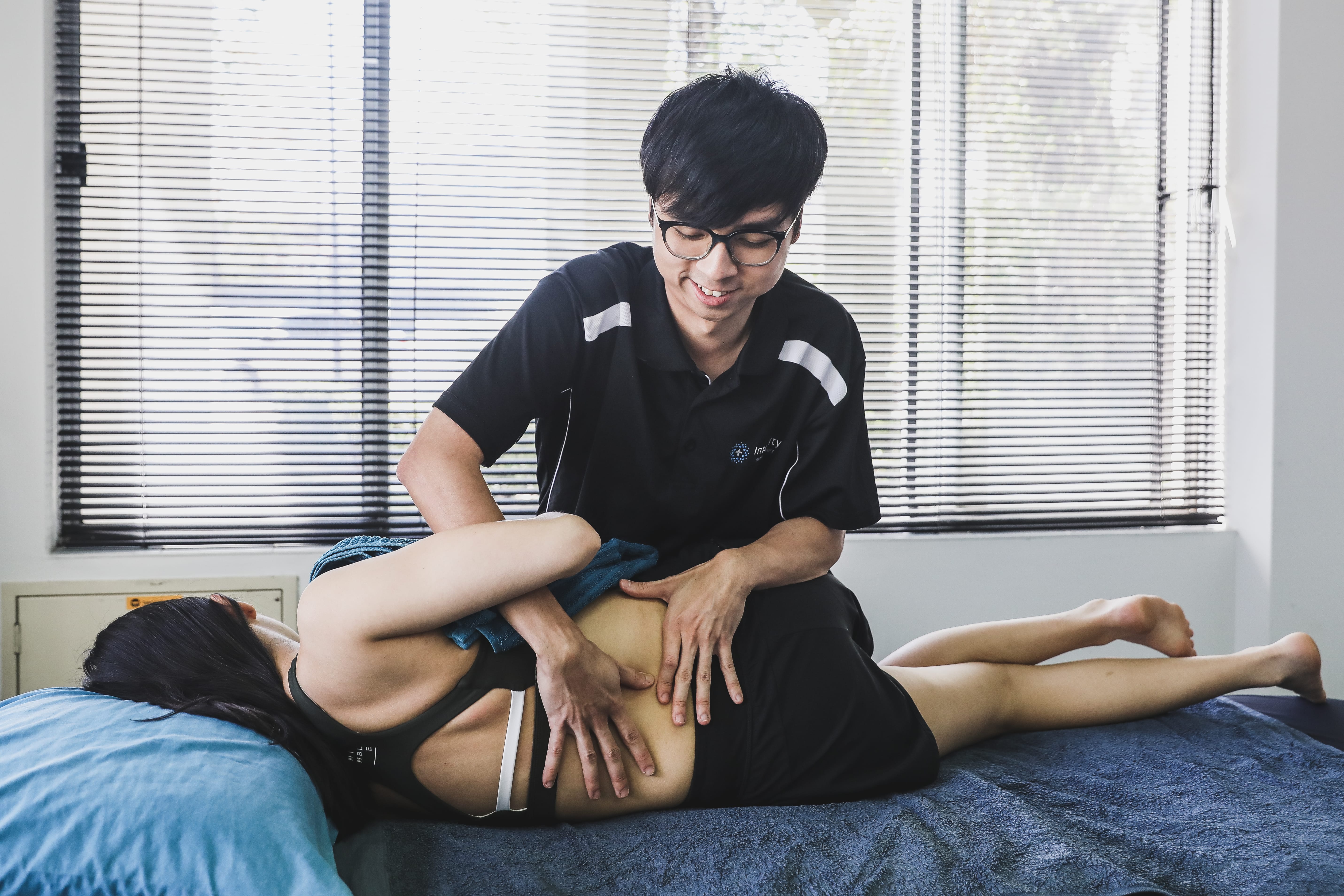
Recurring lower back pain rarely has a single “magic fix”. Most cases involve several contributing factors, which is why treatment focuses on addressing the bigger picture rather than just the site of pain.
At Integrity Physio, we start with a detailed assessment. This helps identify the specific drivers behind your symptoms, whether that is movement patterns, muscle weakness, lifestyle risk factors, or mechanical stress on the spine.
From there, treatment may include a combination of approaches.
Hands-on treatment to settle flare-ups
Manual therapy techniques can help reduce pain, improve mobility and relax tight muscles during a flare-up. This often allows people with back pain to move more comfortably so they can begin rehabilitation sooner.
Strength and exercise rehabilitation
Targeted strengthening is one of the most effective strategies for chronic back pain. Exercises are designed to improve the capacity of your core, glutes and spinal support muscles so your back can better tolerate daily activities like sitting, lifting and bending.
Movement and posture education
Small adjustments to movement habits, workstation setup or lifting techniques can significantly reduce strain on the lower back. Education is a key part of long-term pain management, helping you understand how to move with more confidence.
Building long-term resilience
The aim is to gradually improve your strength, mobility and activity tolerance so your body can handle the physical demands of everyday life. This helps reduce the risk of developing future flare-ups of recurring lower back pain.
When should you seek professional help?
Most cases of recurring lower back pain improve with the right movement, strengthening and pain management strategies. However, some symptoms should be checked by a healthcare professional.
You should seek healthcare advice if you experience:
- Pain lasting longer than 6 weeks despite rest or basic pain management
- Pain that’s getting progressively worse rather than improving
- Severe nerve pain travelling down the leg, especially with numbness or weakness
- Changes in bowel or bladder control, which may indicate pressure on the spinal cord and requires urgent assessment
- Persistent numbness, tingling, or leg weakness affecting normal movement
- Pain following a significant fall or accident
- Unexplained weight loss or other unusual symptoms alongside back pain
While these situations are less common, they can indicate conditions such as spinal stenosis, nerve compression, or other underlying issues that may require further investigation, such as X-rays or CT scans.
Breaking the cycle of recurring back pain
Recurring lower back pain can feel frustrating, especially when it seems to come back without warning. But in many cases, these flare-ups follow patterns that can be identified and addressed.
At Integrity Physiotherapy, our approach to physio for lower back pain in Perth focuses on understanding the full picture. Through detailed assessment, hands-on treatment, and personalised exercise rehabilitation, we aim to reduce pain, improve strength, and help your body better tolerate the demands of daily activities.
Book your appointment today and let’s work together on a plan to help you move with more confidence.
Please note that this information is general in nature and should not replace advice from a qualified healthcare professional. If you are concerned about your symptoms, speak with your GP or Physiotherapist.
Suffering from lower back pain? The team at Integrity can help.