Heel pain can make the first few steps in the morning feel sharper than they should. It can also turn simple things, like walking, standing at work, or getting back into exercise, into something you have to think twice about.
So, can foot strengthening help plantar fasciitis?
In many cases, yes. Building better strength through the foot and lower leg can support recovery, improve how your foot handles load, and help reduce the chance of symptoms returning. But it needs to be done the right way.
In this breakdown, we’ll look at how intrinsic foot strength plays a role in plantar fasciitis, which exercises may help, and when plantar fasciitis physiotherapy may be the right next step.
What is plantar fasciitis?
Plantar fasciitis is a common cause of heel pain that affects the thick band of tissue running along the bottom of your foot, known as the plantar fascia. This tissue helps support your arch and plays a role in absorbing load when you walk, stand, run, or climb stairs.
When the plantar fascia becomes irritated or overloaded, it can cause pain near the heel or through the arch of the foot. Many people notice it most during their first few steps in the morning, after sitting for a while, or after long periods on their feet.
While plantar fasciitis is often linked to tight calves, sudden increases in activity, footwear, or prolonged standing, strength also plays an important role. To understand why, it helps to look at how the muscles in and around the foot support the plantar fascia.
Why foot strength matters for plantar fasciitis
The plantar fascia doesn’t work on its own. It’s supported by the muscles in your foot, ankle, and lower leg, which all help manage the load placed through your heel and arch.
This is where intrinsic foot strength becomes important. These small muscles sit within the foot and help control your arch, support your balance, and absorb force as you move.
When these muscles aren’t doing their job well, the plantar fascia may have to take on more strain than it can comfortably handle. Over time, this can contribute to irritation, especially during walking, running, or long periods of standing.
Good foot strength may help by:
- Supporting the arch of the foot more effectively
- Improving how your foot absorbs and distributes load
- Reducing excess strain through the plantar fascia
- Improving balance and control during movement
- Helping your foot tolerate daily activity, work, and exercise more comfortably
That’s why strengthening is often included in plantar fasciitis physiotherapy. While settling your pain is an important part of treatment, the bigger goal is to help your foot become stronger, more resilient, and better able to handle everyday load over time.
Which strengthening exercises may help?
A physiotherapist will need to assess your foot, ankle, walking pattern, strength, mobility, and activity levels to understand what is truly contributing to your heel pain. This helps make sure your exercises are specific to you, rather than guessing from a generic list.
That said, there are some common strengthening exercises that are often used to support plantar fasciitis recovery.
1. Short foot exercise
The short foot exercise helps build control through the small muscles that support your arch.
- Keep your foot flat on the floor and gently draw the ball of your foot towards your heel.
- Try not to curl your toes. The movement should come from lifting and controlling the arch.
Tip: Start seated if this feels difficult, then progress to standing once you can control the movement well.
2. Towel curls
Towel curls are a simple way to work on intrinsic foot strength and toe control.
- Place a towel under your foot and use your toes to gently scrunch it towards you.
- Keep the movement slow and avoid gripping aggressively through the toes.
3. Calf raises
Your calf muscles and Achilles tendon influence how much load travels through the heel and plantar fascia. Calf raises can help improve strength through this area.
- Start with both feet on the ground and rise slowly onto your toes.
- Lower back down with control, rather than dropping quickly.
Tip: If this increases your heel pain, start with a smaller range or do the exercise with support from a bench or wall.
4. Toe lifts and toe control (toe yoga)
Toe control exercises help improve coordination through the foot, especially around the big toe and smaller toes.
- Try lifting your big toe while keeping the other toes down.
- Then try keeping the big toe down while lifting the smaller toes.
Strengthening works best with a complete physiotherapy plan
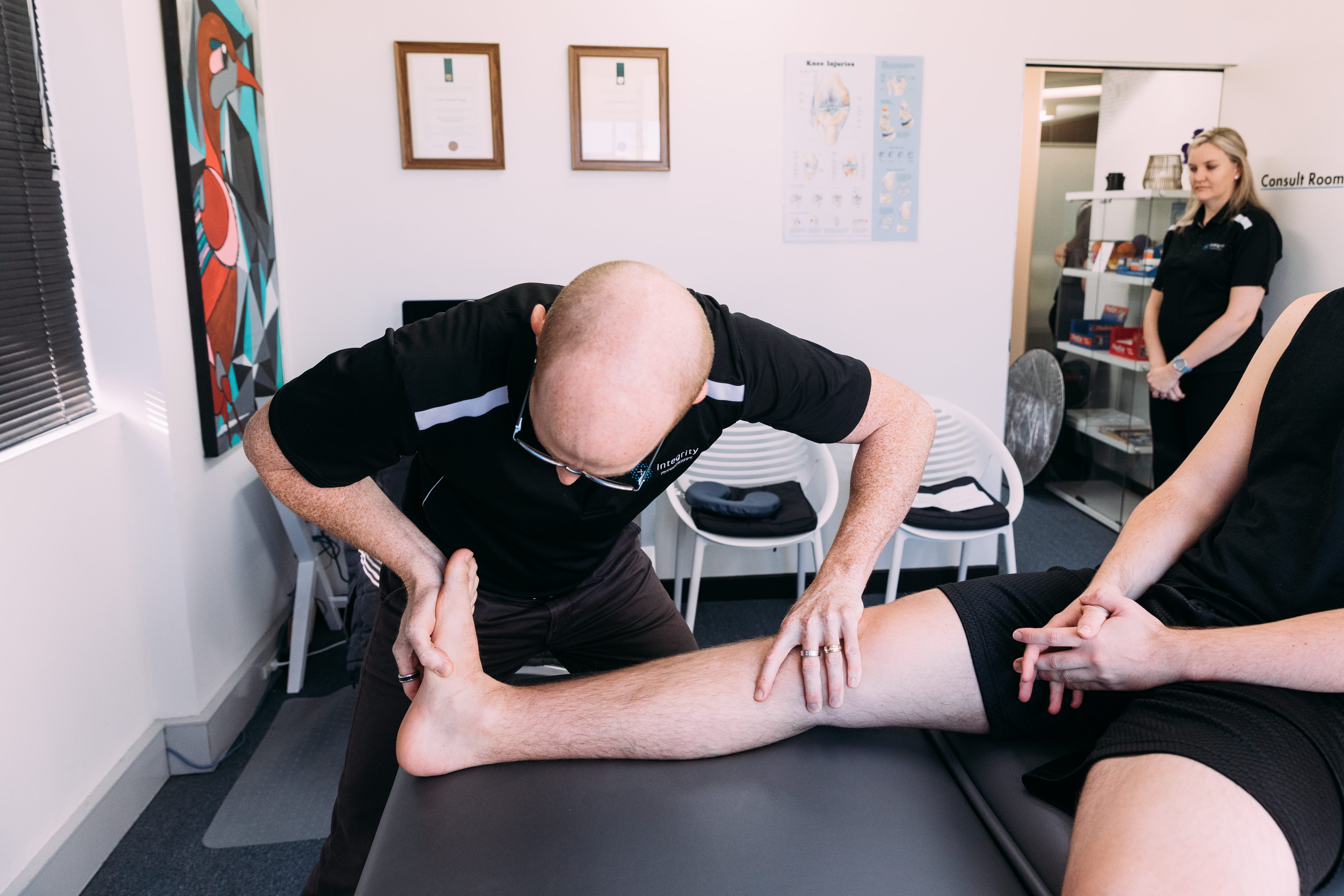
While strengthening can be helpful, plantar fasciitis usually needs more than a few isolated foot exercises. The best results often come from understanding why the plantar fascia became irritated in the first place, then building a plan around your pain, lifestyle, footwear, activity levels, and goals.
At Integrity Physiotherapy, plantar fasciitis physiotherapy includes:
- A thorough assessment of your foot, ankle, calf strength, walking pattern, and movement habits
- Hands-on treatment to help reduce pain, improve mobility, and settle irritated tissues
- Taping or footwear advice to reduce strain through the heel and arch
- A tailored strengthening program that progresses at the right pace for you
- Clear guidance around walking, running, work demands, or sport so you know what to do and what to avoid
This approach helps bridge the gap between short-term relief and long-term recovery. While settling your pain is an important first step, the bigger goal is to improve your foot’s capacity so it can handle everyday load with more confidence.
When should you see a physio for heel pain?
Heel pain can sometimes settle with the right changes to activity, footwear, and exercise. However, it’s worth seeing a physiotherapist if your symptoms aren’t improving or if they’re starting to affect how you move day to day.
You may benefit from physiotherapy if:
- Your heel pain has lasted more than a few weeks
- Your first steps in the morning are becoming more painful
- You’re limping or changing the way you walk
- Pain returns every time you increase walking, running, or sport
- Standing at work is becoming difficult
- You’re unsure which plantar fasciitis exercises are safe for you
- You’ve tried rest, stretching, or rolling your foot without lasting improvement
A physiotherapist can assess what is contributing to your pain and guide you through the right treatment plan. This may include hands-on treatment, load management, footwear advice, and a strengthening program matched to your current level.
Build a stronger foundation for recovery
Plantar fasciitis can be frustrating, especially when it keeps coming back every time you try to walk more, stand longer, or return to exercise.
If heel pain is affecting your routine, our team at Integrity Physiotherapy can help with tailored physio for plantar fasciitis in South Perth, including hands-on treatment, practical advice, and progressive strengthening exercises suited to your needs.
Book an appointment today and let’s get you moving more comfortably again.
Disclaimer
This article is intended for general information only. Symptoms, causes, and treatment options for plantar fasciitis can vary from person to person. For an accurate diagnosis and personalised advice, please consult a qualified healthcare professional.
Suffering from heel pain? The team at Integrity can help.

Leslie Trigg
Director & Senior Physiotherapist, Integrity PhysiotherapyLeslie Trigg has over 19 years of clinical experience and is the Director and Senior Physiotherapist at Integrity Physiotherapy. He graduated with a degree in Human Biology (Anatomy and Physiology) from Curtin University in 2001 before completing a Master of Physiotherapy in 2007. Leslie has a special interest in persistent pain, jaw disorders, dizziness and complex musculoskeletal conditions, combining hands-on physiotherapy with evidence-informed, nervous system–based approaches to help people recover from pain and return to the activities they enjoy. Outside work, he enjoys mountain biking, strength training, yoga and spending time with his family.